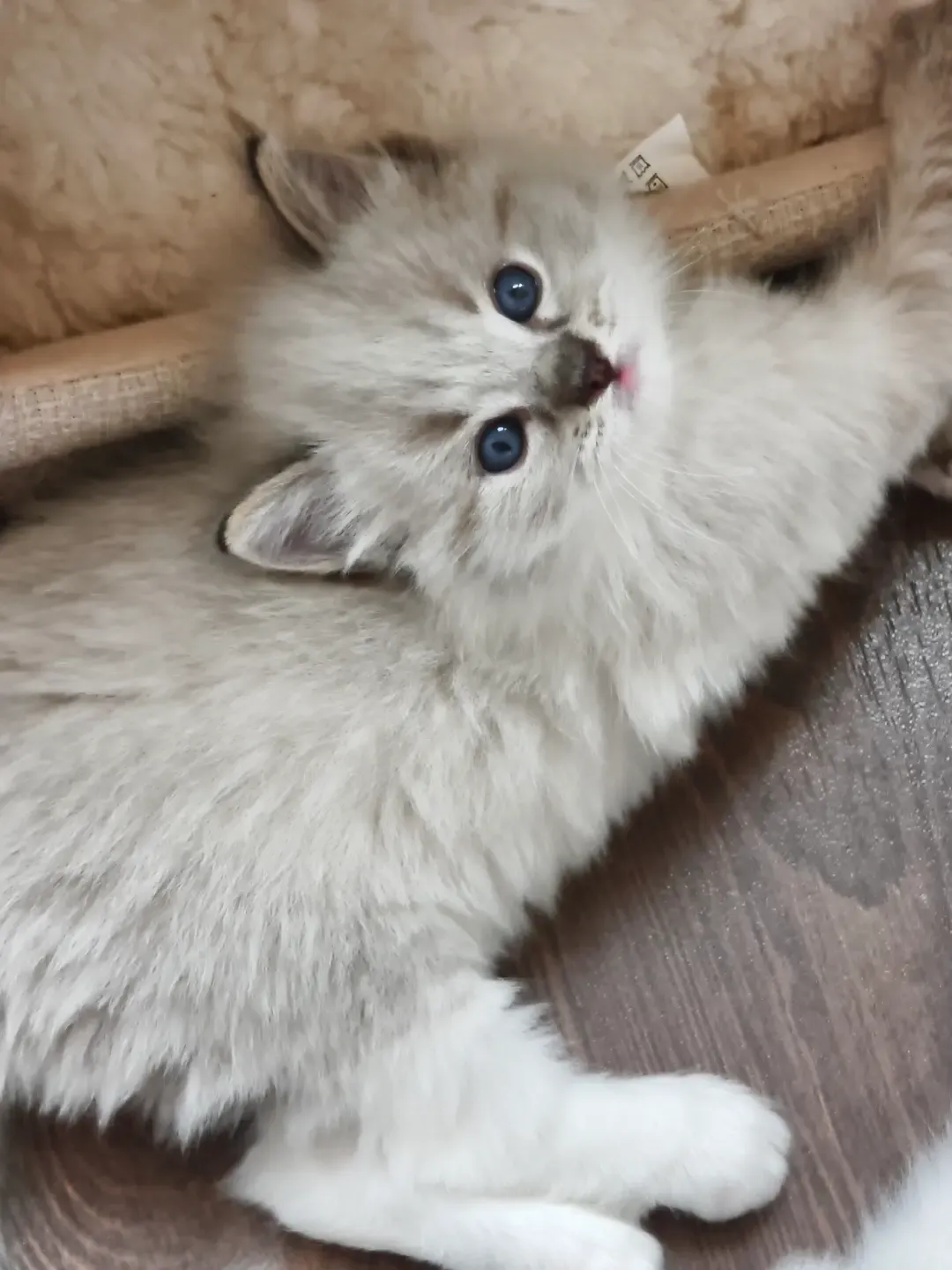
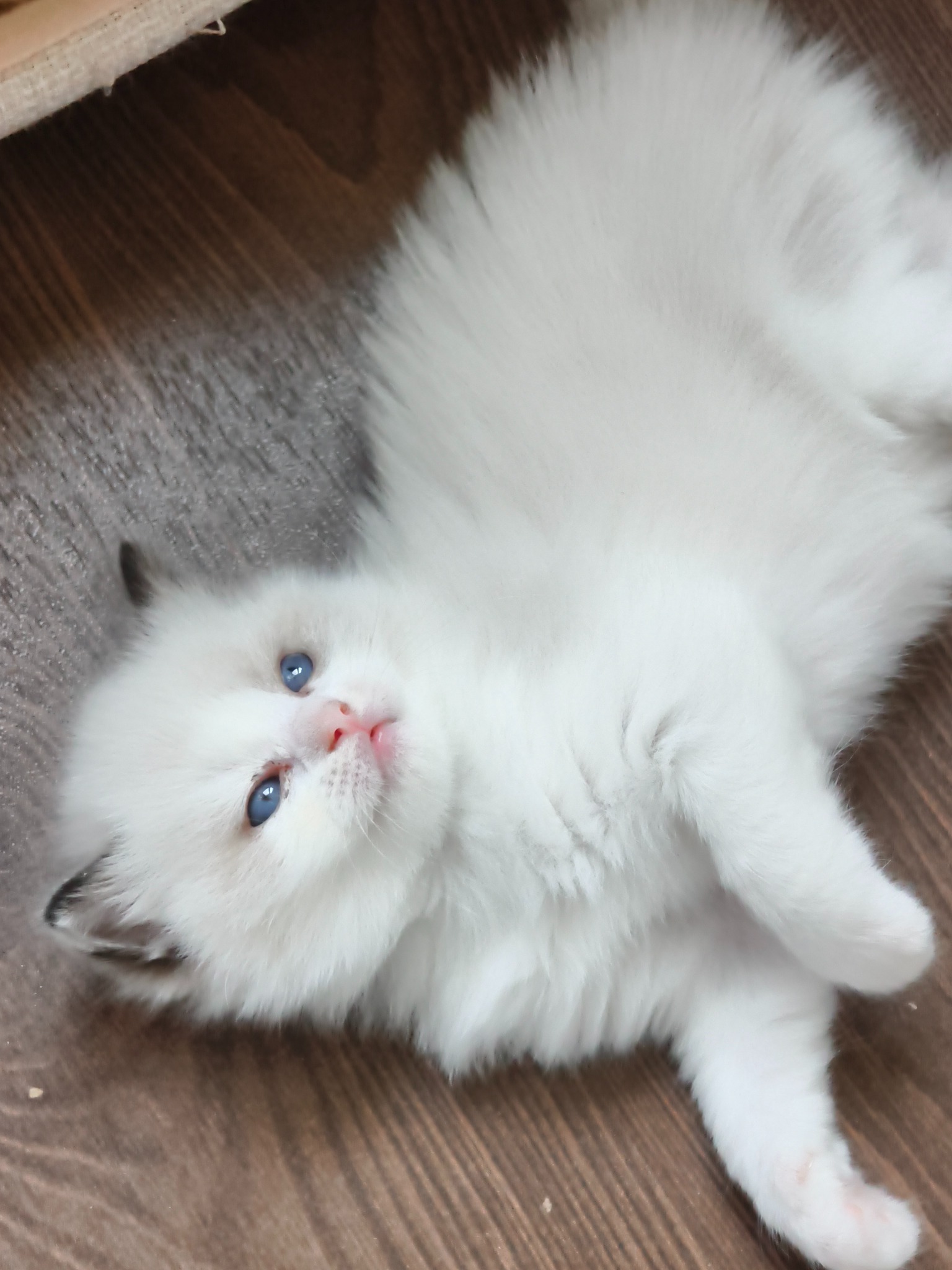
Seal
Deep brown, almost black at the points, with warm contrast.
Understanding the breed
An invitation to understand this gentle giant: its history, coat development and the terms used for its colours and patterns.
What is a Ragdoll?
The Ragdoll is a large, semi-longhaired cat known for blue eyes, an elegant appearance and relatively slow physical development. It is generally described as gentle and people-oriented.
Its name means “rag doll” in English. It refers to the tendency of many Ragdolls to relax when held. This is only a tendency, however: every Ragdoll has its own personality, preferences and way of relating to people.
A story born in California
Development of this relatively recent breed began in the United States in the 1960s with breeder Ann Baker. Une chatte appelée Josephine is generally considered one of the breed’s historical founders.
From Josephine and other selected cats, the first lines were developed with the aim of achieving large size, a pleasant temperament, semi-long hair, blue eyes and the colourpoint pattern. The breed later spread throughout the United States, Europe and many other countries.
A coat that develops
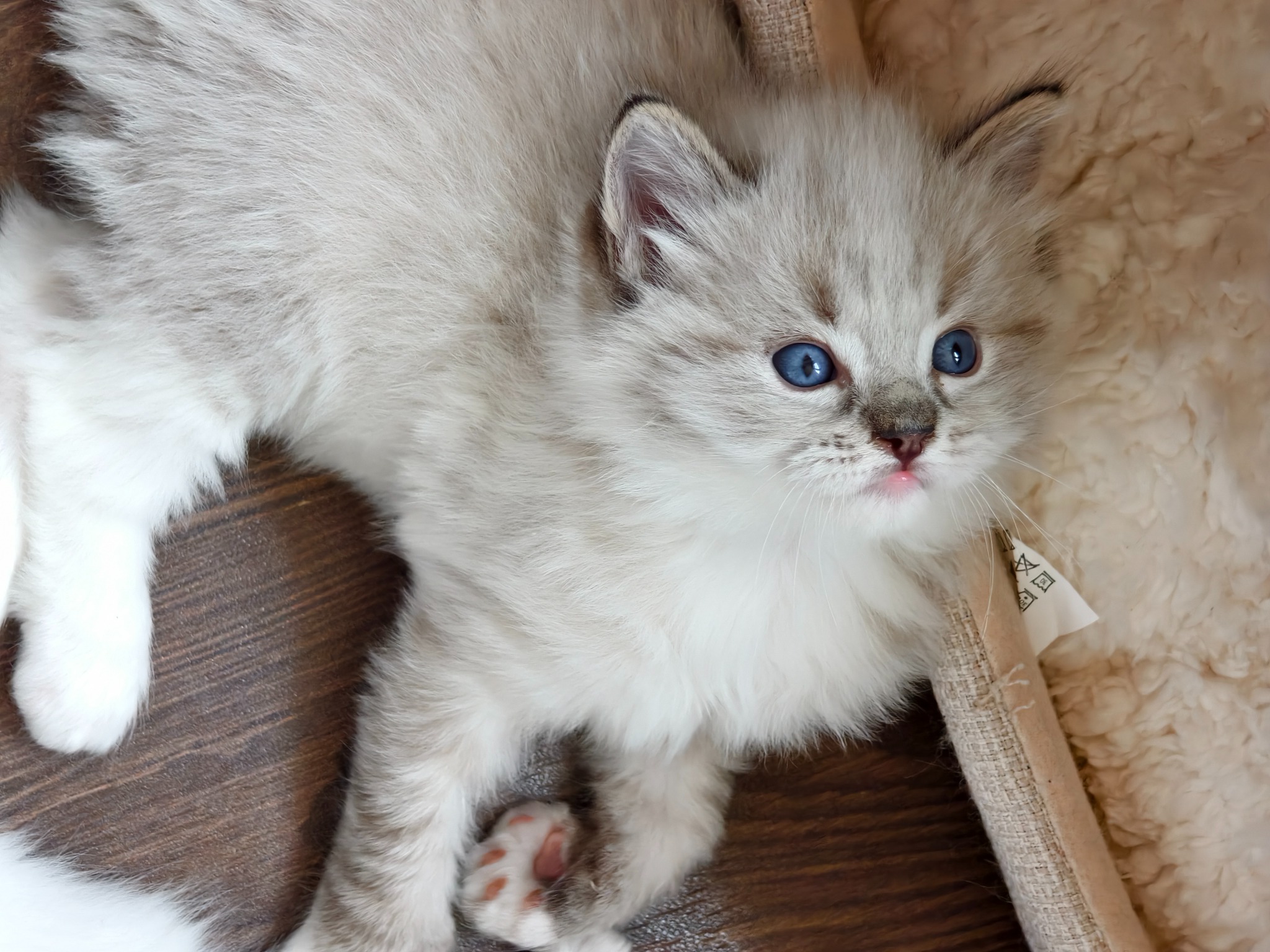
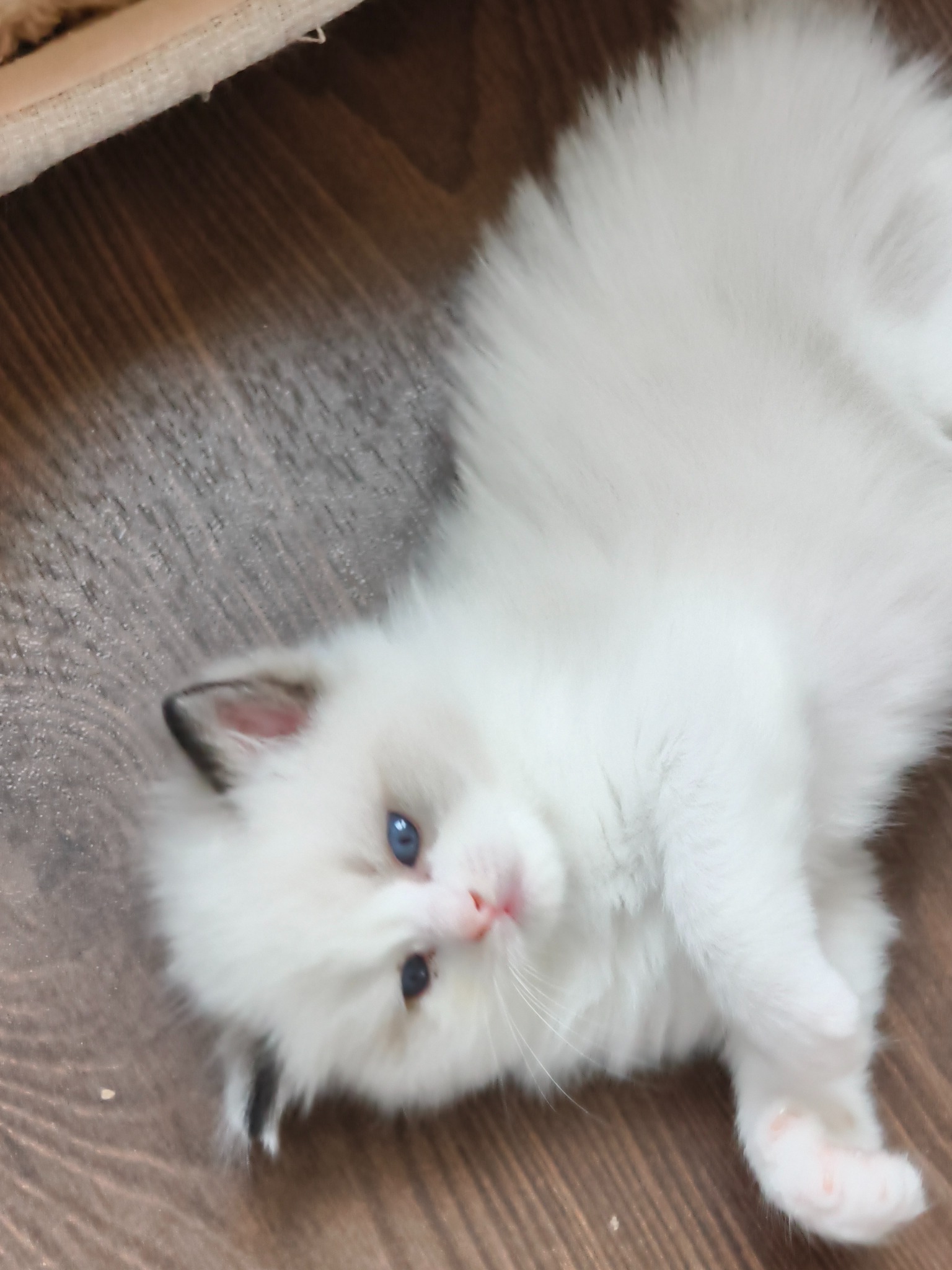
The Ragdoll has temperature-sensitive colourpoint colouring. At birth, kittens are white or almost white. Pigmentation gradually appears on the cooler areas: ears, face, legs and tail.
The coat continues to develop for several months, sometimes several years. A young Ragdoll may therefore show a noticeably different contrast from its adult appearance.
The Ragdoll palette
La couleur désigne la nuance des zones pigmentées. Le motif décrit la répartition de la pigmentation et du blanc. On peut ainsi rencontrer un seal bicolour, un bleu mitted, un seal tabby mitted ou encore un bleu tabby bicolour.
Deep brown, almost black at the points, with warm contrast.
A soft, cool blue-grey, the dilute form of seal.
A milk-chocolate brown, lighter and warmer than seal.
A very pale, powdery shade between pinkish grey and cool beige.
Bright, warm red-to-orange points.
The dilute form of red, in very pale cream and apricot tones.
Understanding markings
Both terms describe the same striped effect. Markings can be seen on the mask and around the eyes, as well as on the legs and tail, which may show rings. The face then appears more defined.
Pigmentation is more uniform, without typical tabby stripes. Two cats of the same colour can therefore look very different depending on whether they are tabby or non-tabby.
Main patterns
These descriptions provide simple reference points. In a young kitten, contrast is still soft and the pattern often becomes easier to read over time. The white V of a bicolour can vary considerably in shape and symmetry.
The mask, ears, legs and tail are coloured. The body remains lighter and the pattern contains no white.
The points are coloured, with white mittens on the front paws, boots on the hind legs, a white chin and a white line beneath the belly.
The face features an inverted white V. The chest, belly and legs are largely white, creating a bright contrast.
White extends further than on a classic mitted. Genetically mitted, the cat may visually resemble a bicolour. This term is mainly useful in breeding and is not necessarily recognised as a separate variety by every registry.
Going further
Genetics does not replace observing the cat, but it helps explain why one litter can display several shades and markings.
Some variants are dominant and others recessive. Chocolate, for example, is expressed only when the genetic combination allows it.
Dilution softens pigmentation, turning seal into blue, chocolate into lilac and red into cream.
Red and its dilute form, cream, follow a particular X-linked inheritance pattern that affects males and females differently.
Tabby is separate from the base colour. The presence and distribution of white also depend on specific genetic factors.
Pedigrees & selection
A rare form of dwarfism has been reported in certain lines. Affected kittens may show markedly reduced growth, short limbs, a compact body, slower motor development and, in some cases, significant health problems.
This remains rare and is not fully understood. When several pedigrees were compared, the female ES*Patriarca Gucci appeared in the ancestry of several cases, sometimes on both sides. Her name gave rise to the abbreviation PG.
What does PG Free mean?
PG Free means that pedigree research did not identify Patriarca Gucci in the generations studied. This research uses pedigrees and specialist genealogy databases such as PawPeds.
The depth depends on available data. For our breeding cats, pedigrees were checked over several generations—up to approximately ten where the data allowed.
Thoughtful selection & transparency
We favour thoughtful selection based on pedigree knowledge, breeding-cat health, genetic diversity and completed screening.
This genealogical research complements the information presented on the website: HCM, PKD, FIV/FeLV, blood group, colour genetics and veterinary follow-up. When we state that a breeding cat is PG Free, this always refers to pedigree research, not a DNA test.
Examples born here
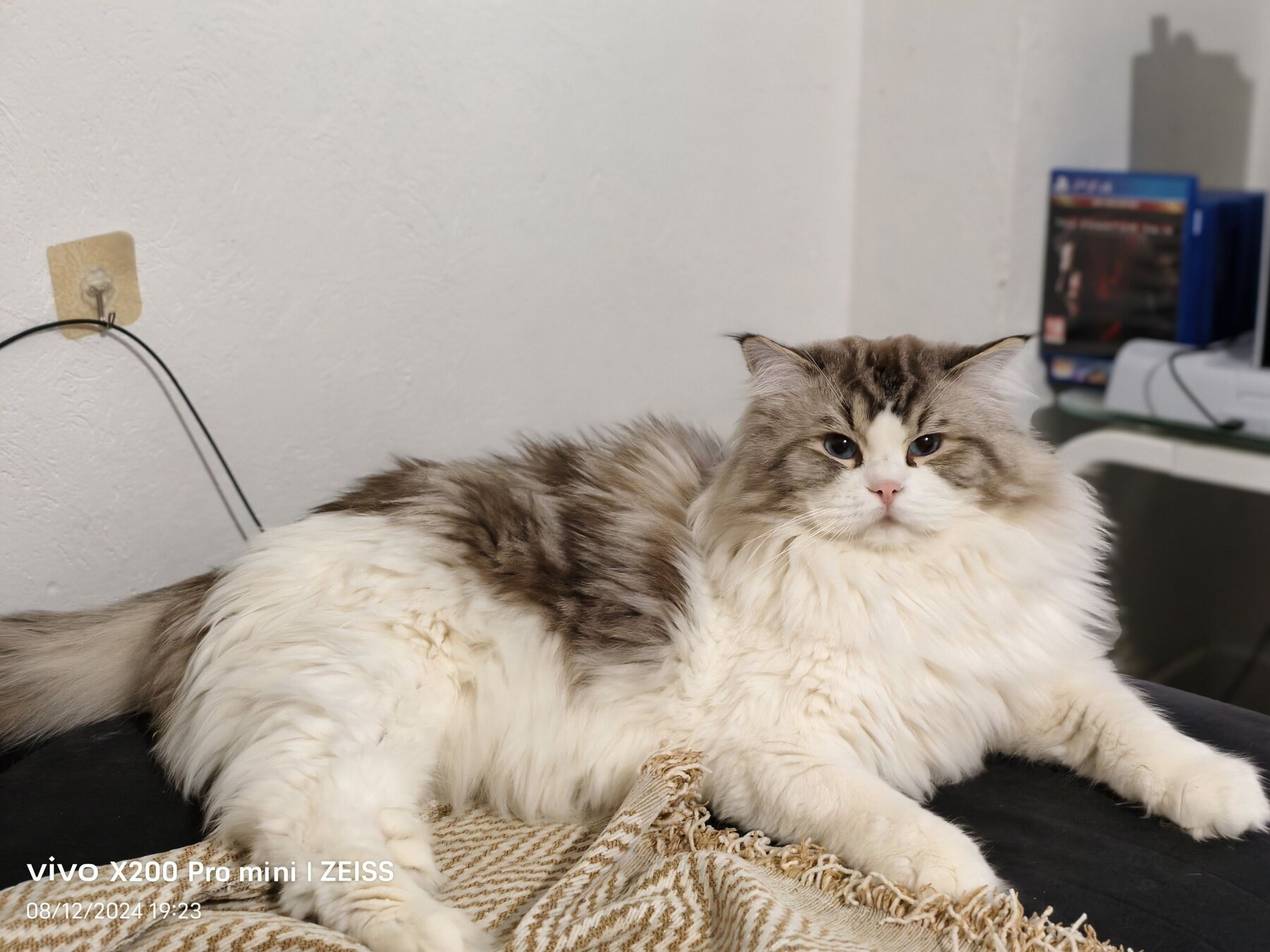
Biggy illustrates tabby markings with the mitted pattern. On Baïa, the inverted white V of the bicolour pattern brightens the face. Their colours will naturally deepen as they mature.